
How can the Manila Diggers’ Challenge League run benefit the PFL and the national team?
- Rodolfo Dacleson II

- Mar 22
- 4 min read
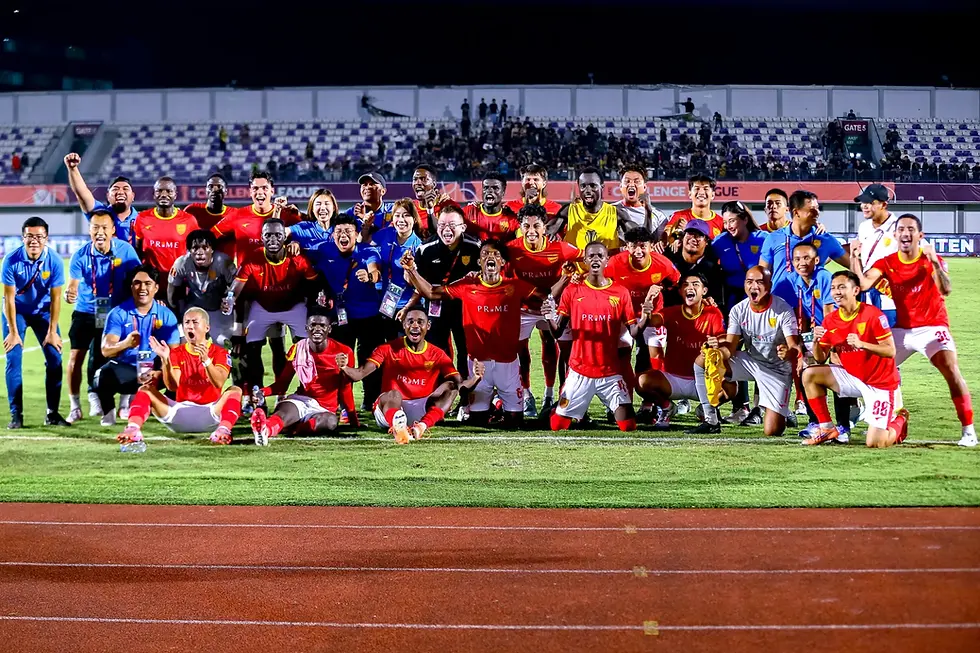
Filipino football fans are seeing the light at the end of the tunnel after a Philippine club inches closer to continental glory.
Manila Diggers advanced to the 2025-2026 Asian Football Confederation (AFC) Challenge League semifinals after surviving a late comeback from Indonesia’s Dewa United, settling for a 2-2 draw in the second leg but securing a 3-2 aggregate victory. Kenji Nishioka’s strike in the first leg on March 5 ultimately proved decisive.
The eight-year-old club is only the second Philippine side to make a deep run in Asian competition, following the now-defunct Ceres Negros — later known as United City — which reached the inter-zonal semifinals of the AFC Cup in 2017.
The AFC Cup previously served as Asia’s third-tier club tournament before the confederation introduced a new structure in the 2024-2025 season, replacing it with the AFC Challenge League. Turkmenistan’s Arkadag won the inaugural title.
With Kaya-Iloilo, the reigning Philippine Football League (PFL) champion, exiting early in the AFC Champions League Two group stage, the Diggers now carry the country’s hopes in continental play.
At present, many PFL clubs operate on limited budgets, with short-term rosters and minimal grassroots systems. Continental success would not solve those issues overnight, but it could create the conditions for long-term growth.
“We target to go to the finals. We want to be the first club in the Philippines to win at the AFC. We want to give honor to our country,” head coach Kim Versales said in a media release by the Philippine Football Federation (PFF).
Frankly, the Diggers winning the Challenge League carries far bigger implications for the PFL and the Philippines. It could legitimize the league and benefit the national team program in the long run.
Legitimizing the PFL
For years, the PFL has struggled to establish itself as a stable, competitive domestic league. Frequent club turnover, limited financial backing, and a small pool of participating teams have slowed its growth.
Continental success can change that perception. History has proven that a single breakthrough can elevate an entire league's credibility.
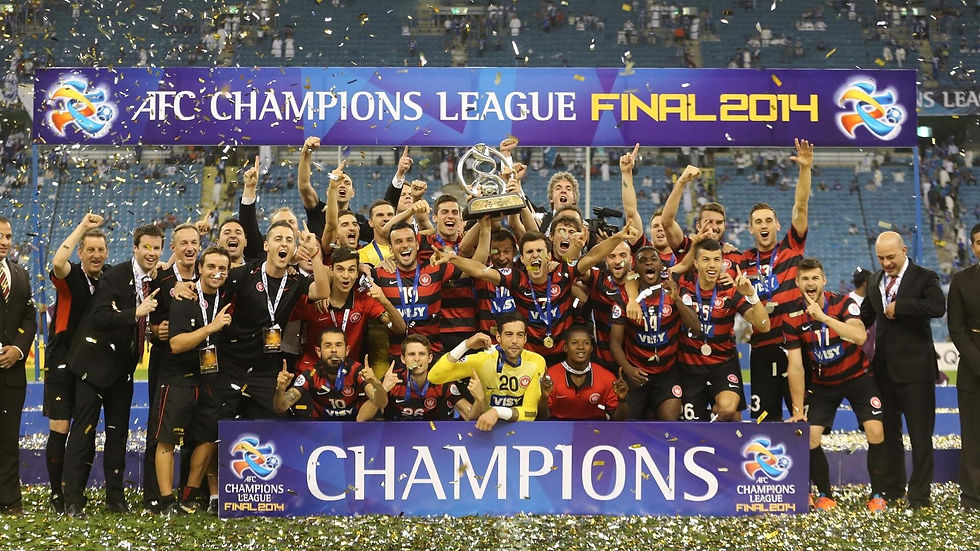
A prime example is the underdog story of Australia's Western Sydney, which won the Champions League in 2014 just two years after its founding. With only a salary cap of only $2.2 million or P131.1 million at that time, the Wanderers' triumph demonstrated that Australian clubs could compete with Asia’s traditional powerhouses, such as Japan’s J.League, South Korea’s K League 1, and Saudi Arabia’s Saudi Pro League.
That monumental victory didn't instantly transform the A-League into Asia's strongest competition, but it changed how the region viewed Australian football.
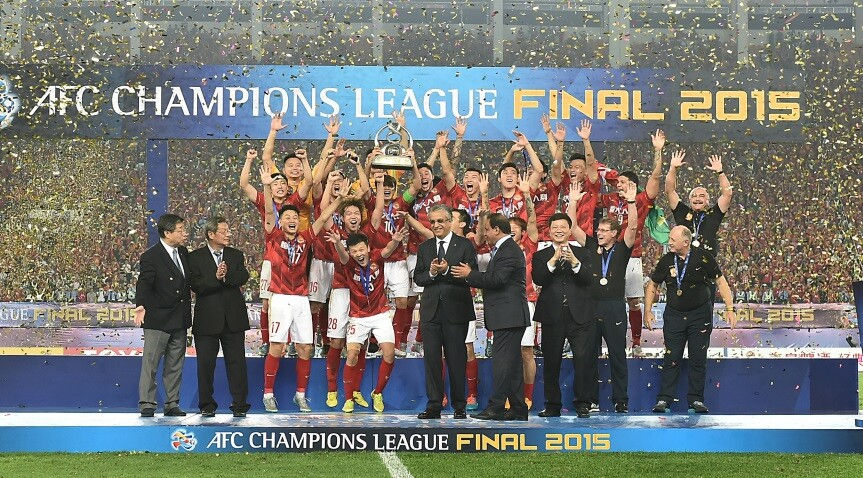
A similar effect occurred in China when Guangzhou Evergrande captured Champions League titles in 2013 and 2015. Their success triggered waves of investment across the Chinese Super League that led to high-profile signings, such as Oscar, Hulk, and Carlos Tevez.
For the PFL, a continental title or even a finals appearance could serve as a signal to potential sponsors and stakeholders that Philippine clubs are worth investing in. That, in turn, could translate to improved club infrastructure, stronger youth academies, more stable club operations, and increased fan engagement.
At present, many PFL clubs operate on limited budgets, with short-term rosters and minimal grassroots systems. Continental success would not solve those issues overnight, but it could create the conditions for long-term growth.
From club success to national team gains

The impact of a stronger domestic league extends beyond club football.
Research supports the link between domestic structures and national team performance. A 2016 study found that countries with more professional and semi-professional clubs tend to achieve higher FIFA ranking points, largely because players have greater access to consistent, high-level training environments.
In practical terms, a deeper league provides more playing opportunities for local talent, reduced reliance on overseas development pathways, and a clearer progression from youth to professional football. This has been a challenge for the Philippines not only in the men's game but also in the women's division. A stronger PFL could help address that gap.
Creating a league is just the start, but sustaining it is another thing. The Diggers are at the right place at the right time to bolster PFL's legitimacy and realize Philippine football's dream.
Japan offers a clear blueprint. It had never qualified for the World Cup before 1998. Since launching the J.League in 1993, the Samurai Blue has not only transformed into an Asian powerhouse but also a regular in the global showpiece.
“The J.League started, and we became professional, and with that, the awareness, motivation, and quality of the players increased,” former Japan men's national team player Kengo Nakamura, as quoted by Taipei Times.
Creating a league is just the start, but sustaining it is another thing. The Diggers are at the right place at the right time to bolster PFL's legitimacy and realize Philippine football's dream.
More than a club milestone
Manila Diggers’ campaign is already a milestone. But its true value lies in what it could represent.
If the Diggers go all the way, it will not just deliver silverware but also offer proof that Philippine football clubs belong in the continental stage.
For the PFL that remains in search of stability and identity, the Challenge League crown or even a respectable finish could be the first real step toward transformation.

Comments